← Back to work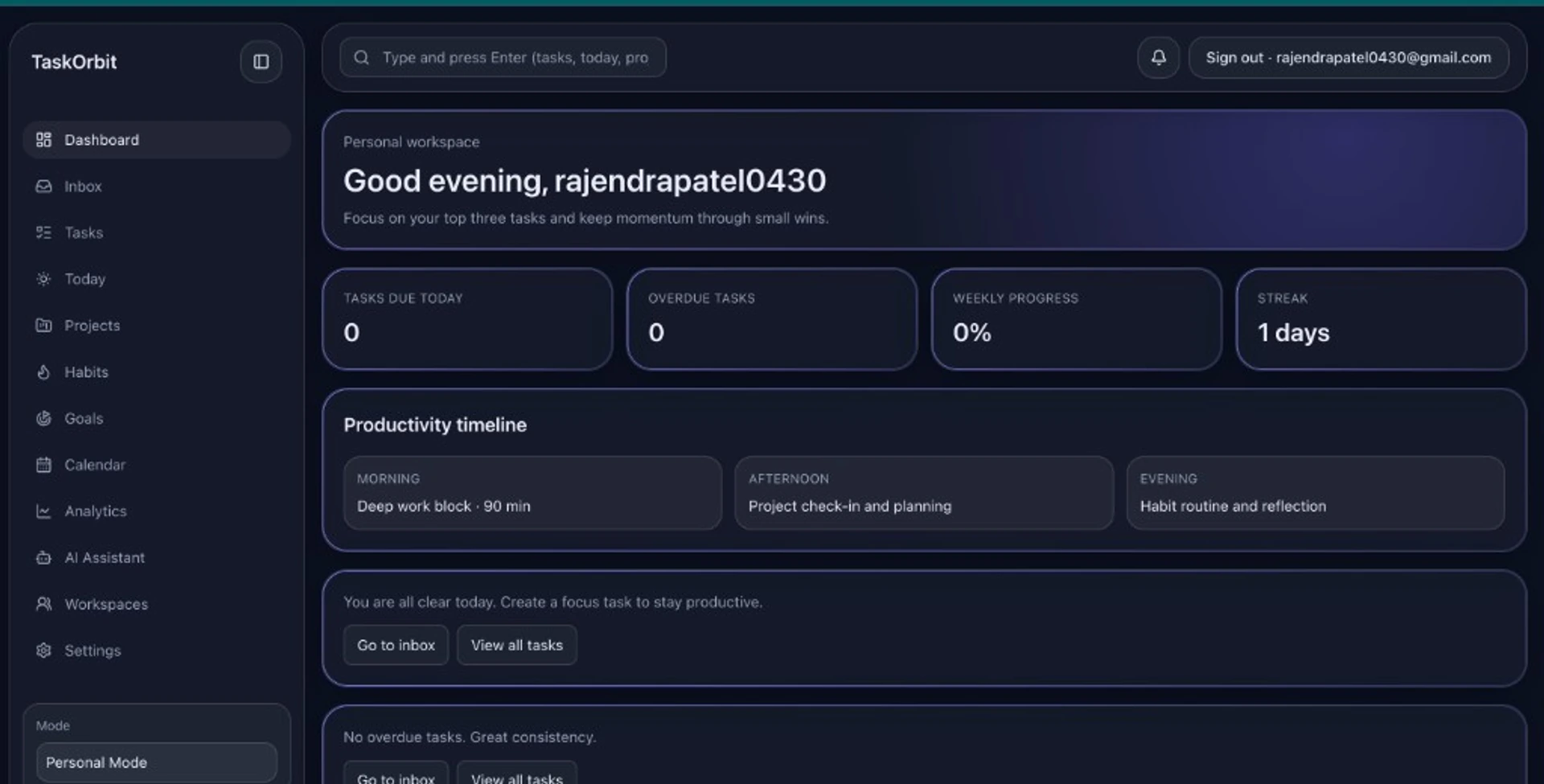
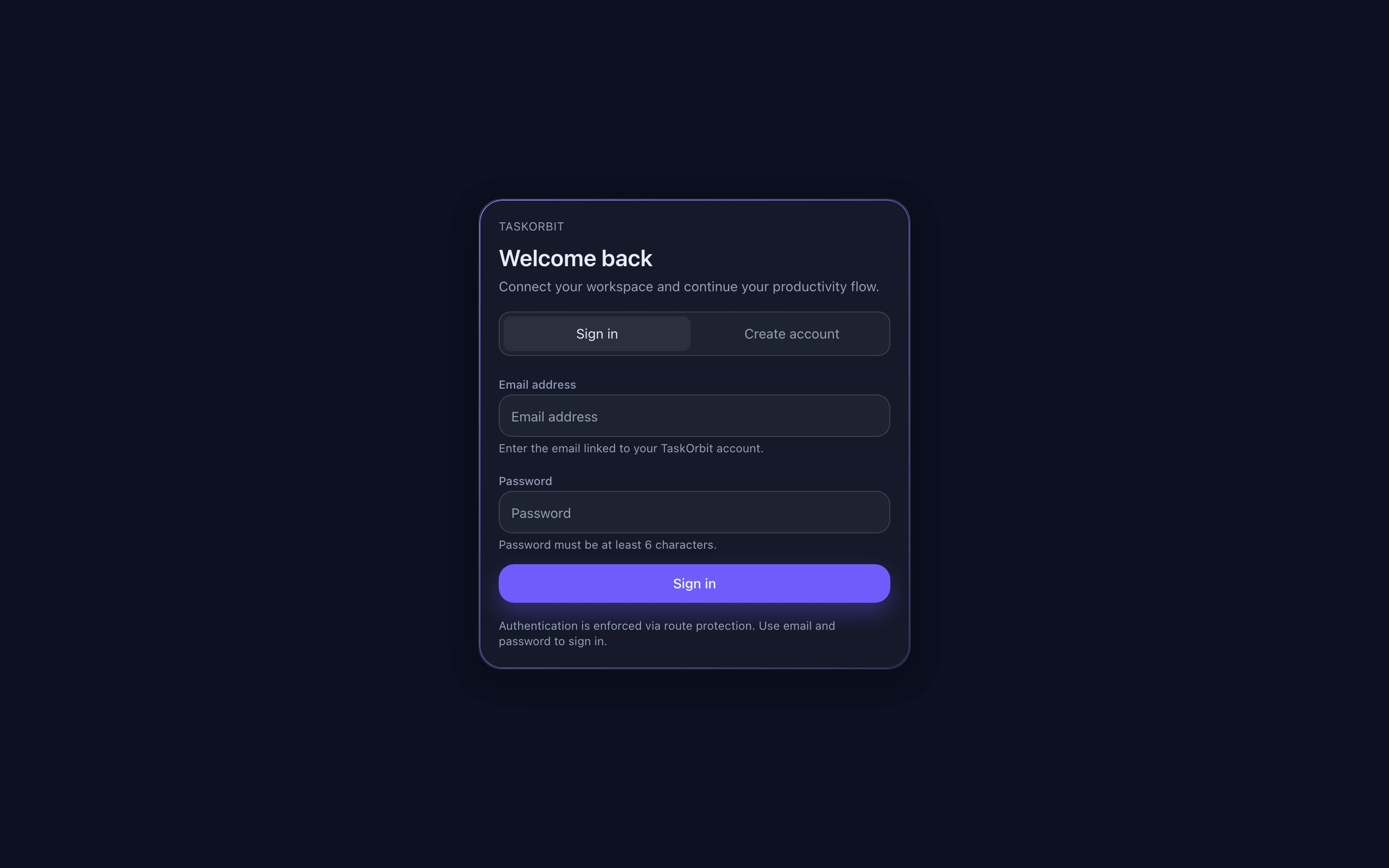
Sign-in flow with email authentication and route protection. 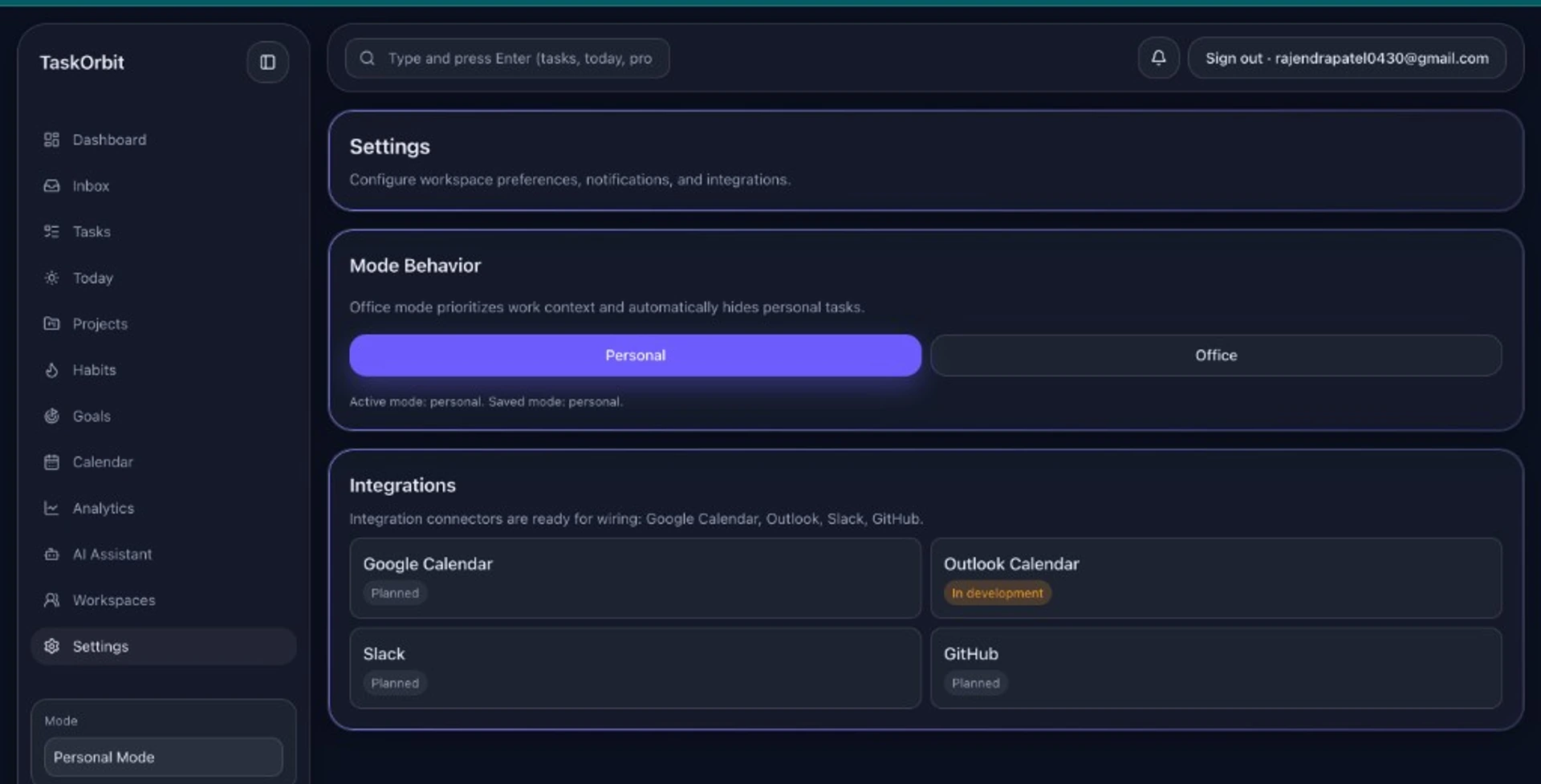
Settings workspace for mode behavior, notifications, and integrations.
taskorbit.app
Case study
TaskOrbit
A live productivity system I use to manage tasks, planning, and workflows — shipped solo from auth to deployment.
TaskOrbit is a productivity application for organizing tasks, tracking status and due dates, and managing daily workflows through a single workspace.
- Role
- Role · Solo builder — product, frontend, backend, deployment
- Timeline
- Timeline · 2024 – present
Next.jsTypeScriptSupabasePostgreSQLZustandTanStack QueryTailwind CSS
- Status
- Live
- Build
- Solo
- Stack
- Next.js + Supabase
01 — Problem
What problem does it solve?
Scattered tools break focus. I needed one workspace for tasks, status, due dates, and planning without slowing down daily use.
02 — Origin
How the idea took shape
During busy weeks at Omniful, I was juggling deadlines across multiple tools. I built TaskOrbit as the system I would actually open every day.
03 — Role
My role
- Owned end-to-end product design, UI implementation, API integrations, authentication, and production deployment.
- Architected reusable components and custom hooks to reduce duplication and simplify feature development.
- Built task creation, editing, status management, due-date tracking, and filtering workflows.
04 — Challenge
The challenge
- Keeping task-heavy screens responsive as filters and data volume grew.
- Designing predictable state across create, edit, and status-change flows.
- Balancing a simple daily workflow with enough structure for planning.
05 — Approach
The approach
- Built a feature-oriented frontend with shared UI primitives and hooks to avoid duplication across modules.
- Used TanStack Query for server-state caching and Zustand for lightweight client workflow state.
- Deployed on Next.js + Supabase with PostgreSQL for auth and reliable data persistence.
- Designed mobile-first layouts so task entry and review stay fast on any device.
06 — Outcomes
Key outcomes
- Live production deployment with authenticated user journeys and core task management flows.
- Reusable frontend patterns that made adding new productivity features significantly faster.
- Open-source repository documenting architecture decisions for recruiters and collaborators.
07 — Differentiator
What makes this different
- Full product ownership beyond employer work — authentication, APIs, performance, and responsive UI.
- Solo-shipped SaaS with live URL and GitHub source, not a tutorial todo app.
- Modern stack (Next.js, TypeScript, Supabase, TanStack Query) aligned with current product engineering standards.
08 — Gallery
Product screens